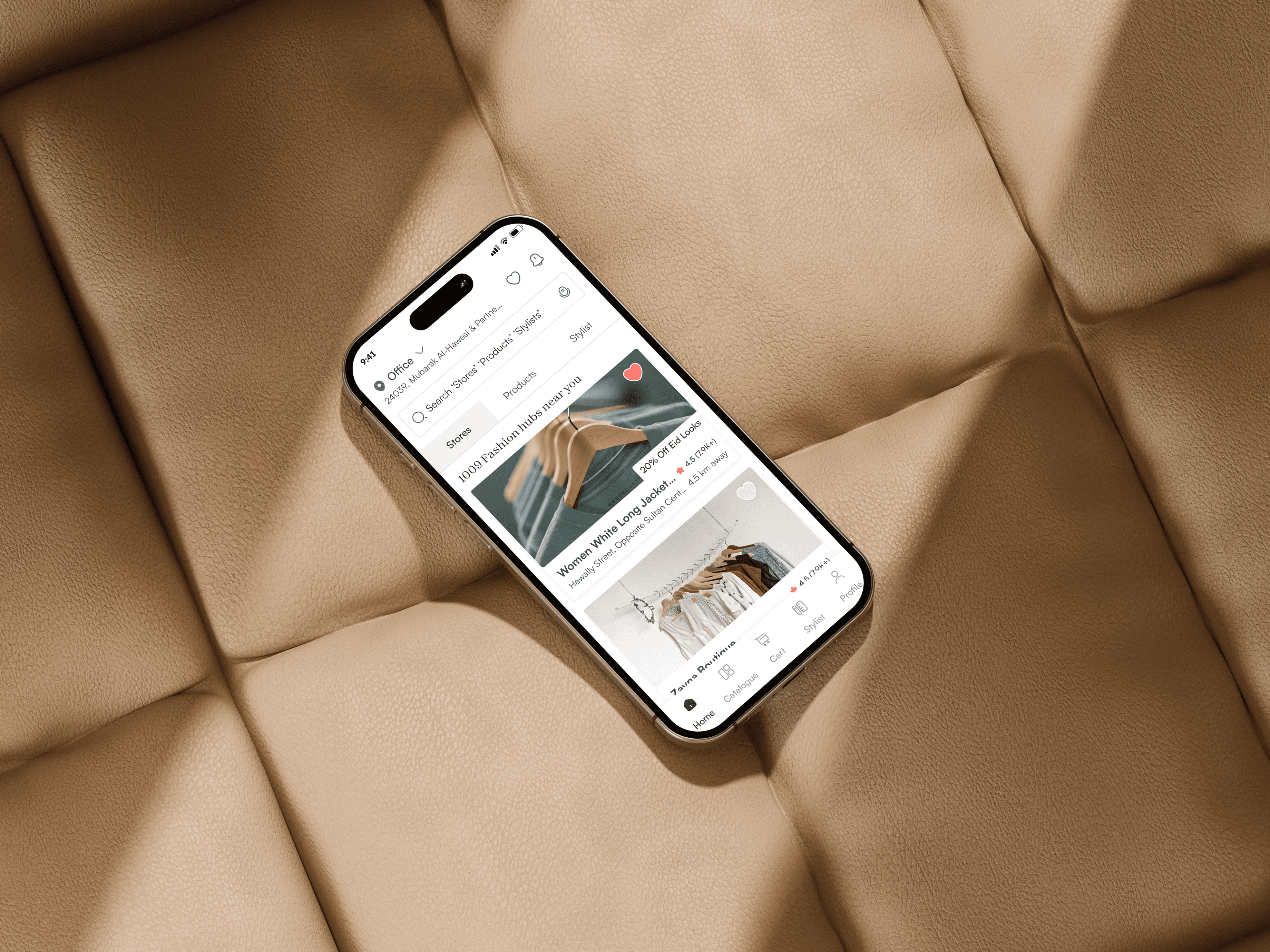
Consumer Fashion Discovery & Styling App
Design of a fashion-focused mobile experience that helps users make confident outfit decisions through guided discovery and stylist support.
Client
Responsibilities
PLATFORM
Timeline
TEAM
TL;DR
• Problem
Users struggled with decision fatigue and lacked confidence while choosing outfits online.
• User
Style-conscious, time-limited consumers looking for curated fashion guidance.
• Key Challenge
Reducing choice overload while maintaining a premium, effortless shopping experience.
• My Role
UX research, interaction design, wireframing, and end-to-end mobile UI design.
• Outcome
Clearer decision-making flows, faster outfit selection, and higher user confidence.
Context & Constraints
Fash is a mobile fashion platform designed to help users discover products, connect with stylists, and make confident outfit decisions without spending excessive time browsing.
• Users often shop in short sessions during breaks or between meetings |
• High expectations for visual quality and premium feel |
• Decision fatigue caused by large product catalogs |
• Need to balance discovery with fast, guided actions |
• Limited tolerance for complex onboarding or learning curves |
User Research & Baseline Insights
Initial research focused on understanding how users currently discover fashion, make purchase decisions, and seek styling advice. Interviews and synthesis exercises revealed recurring friction around overload, trust, and confidence.
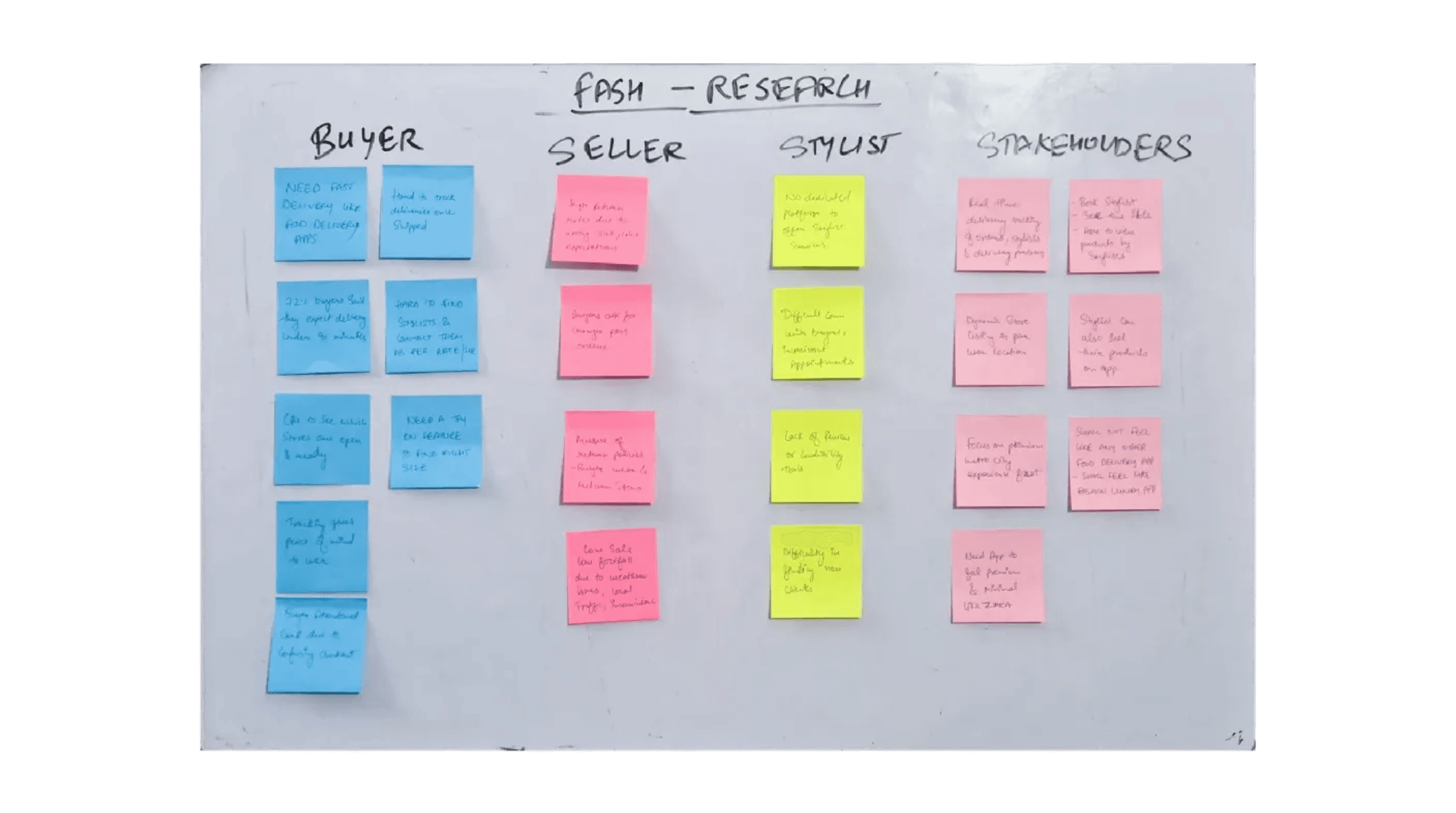
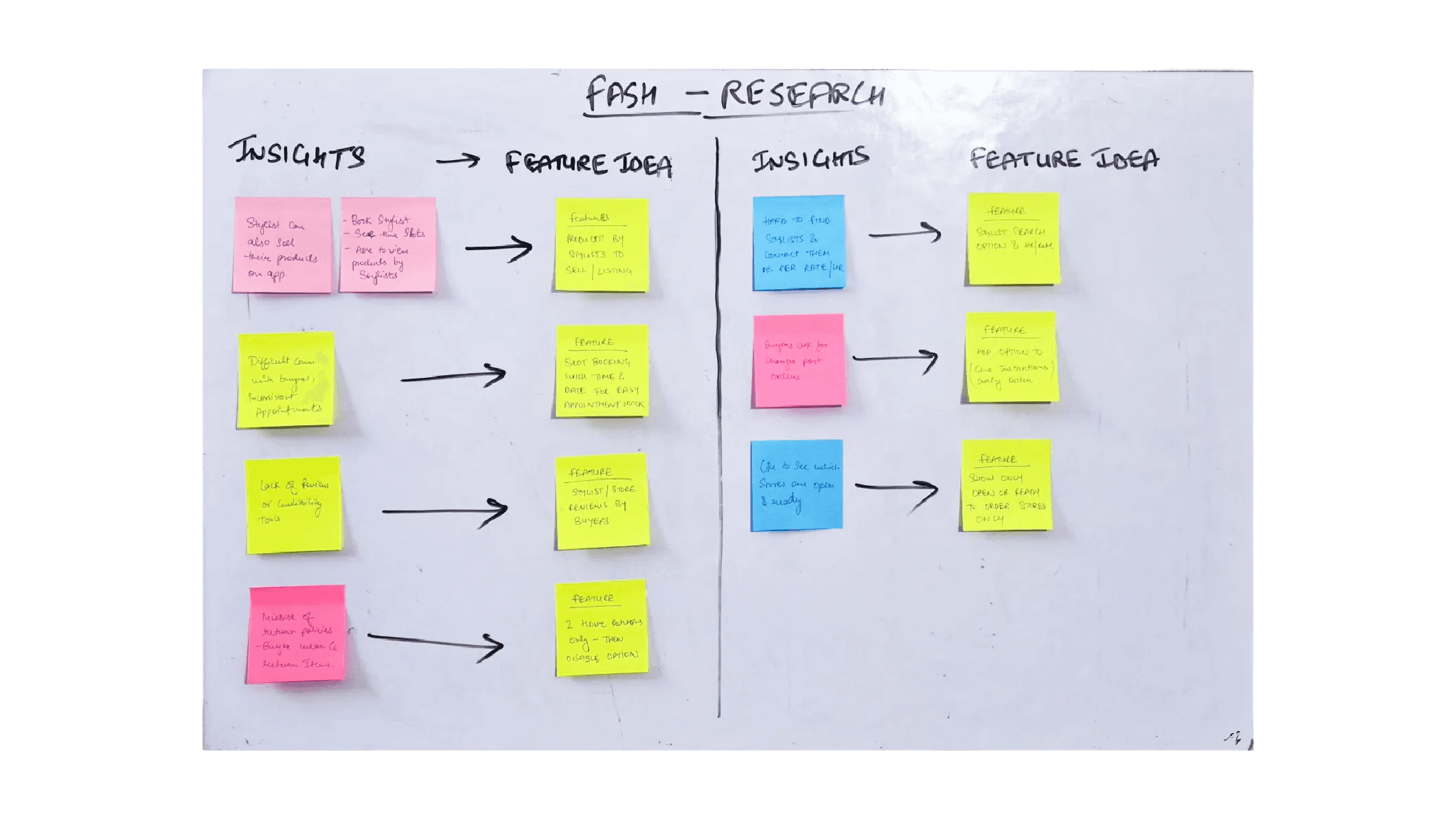
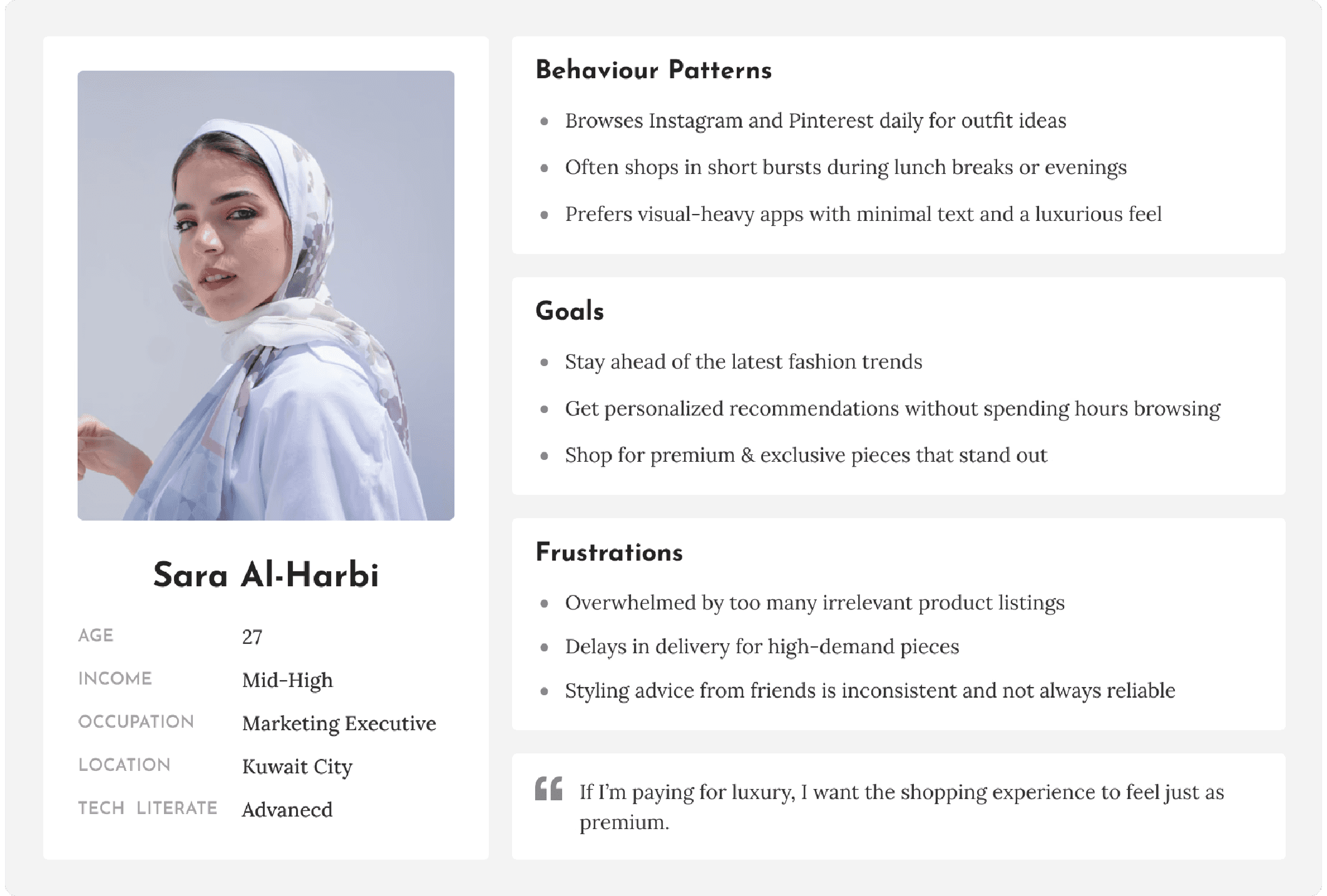
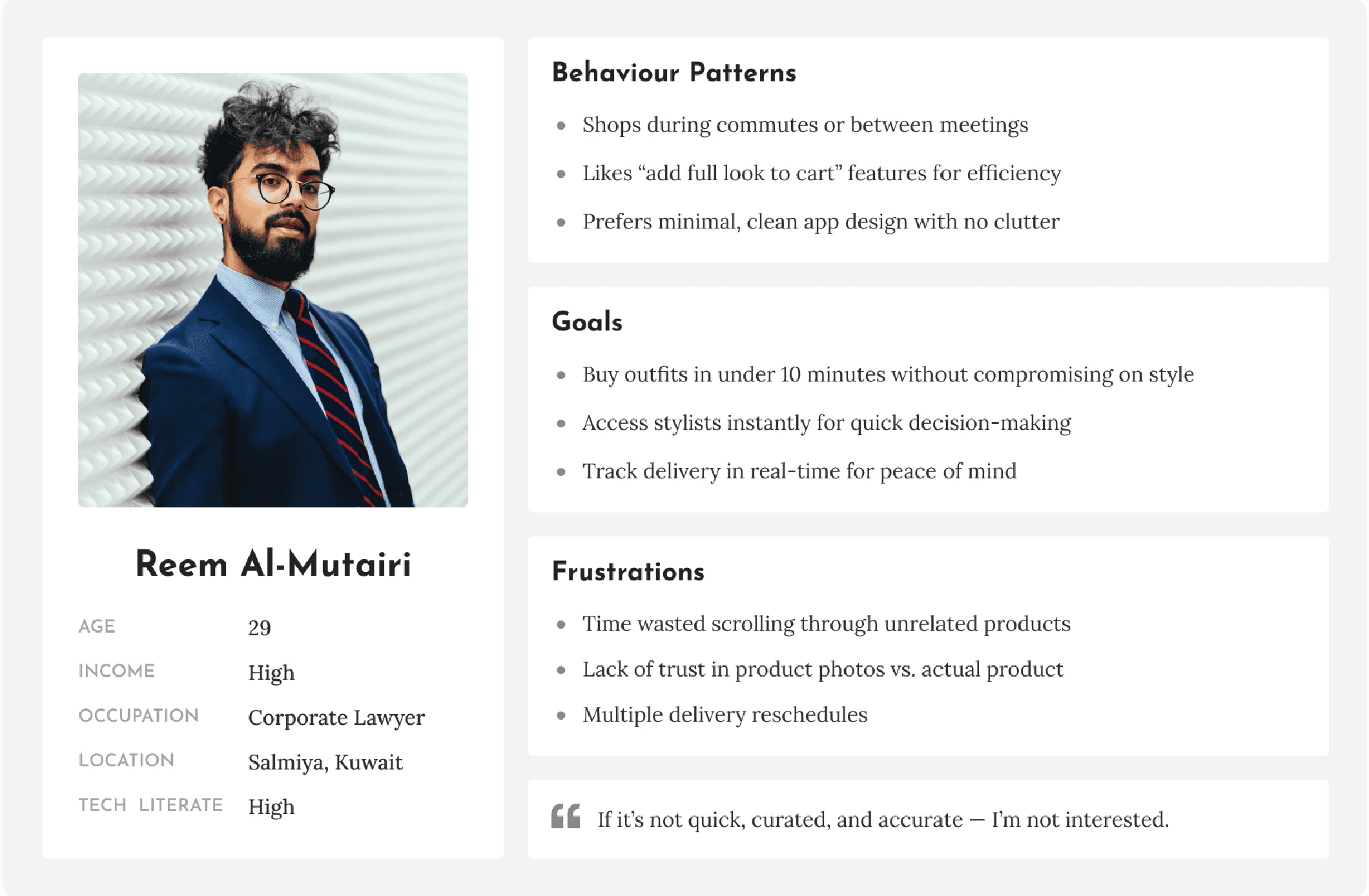
Users felt overwhelmed by too many product options and lacked confidence in their final choices. Existing fashion apps focused on browsing rather than guiding users toward clear, personalized decisions.
I worked as the Product Designer, responsible for translating research insights into a guided fashion experience that reduced decision fatigue and increased user confidence.
• Conducted user interviews and synthesized insights into personas
• Defined key user journeys for discovery, styling, and booking
• Designed mobile-first interaction patterns and UI components
• Created wireframes and high-fidelity screens for core flows
• Iterated designs based on usability and clarity
The information architecture focused on guiding users quickly toward relevant products or stylists while keeping navigation lightweight and intuitive.
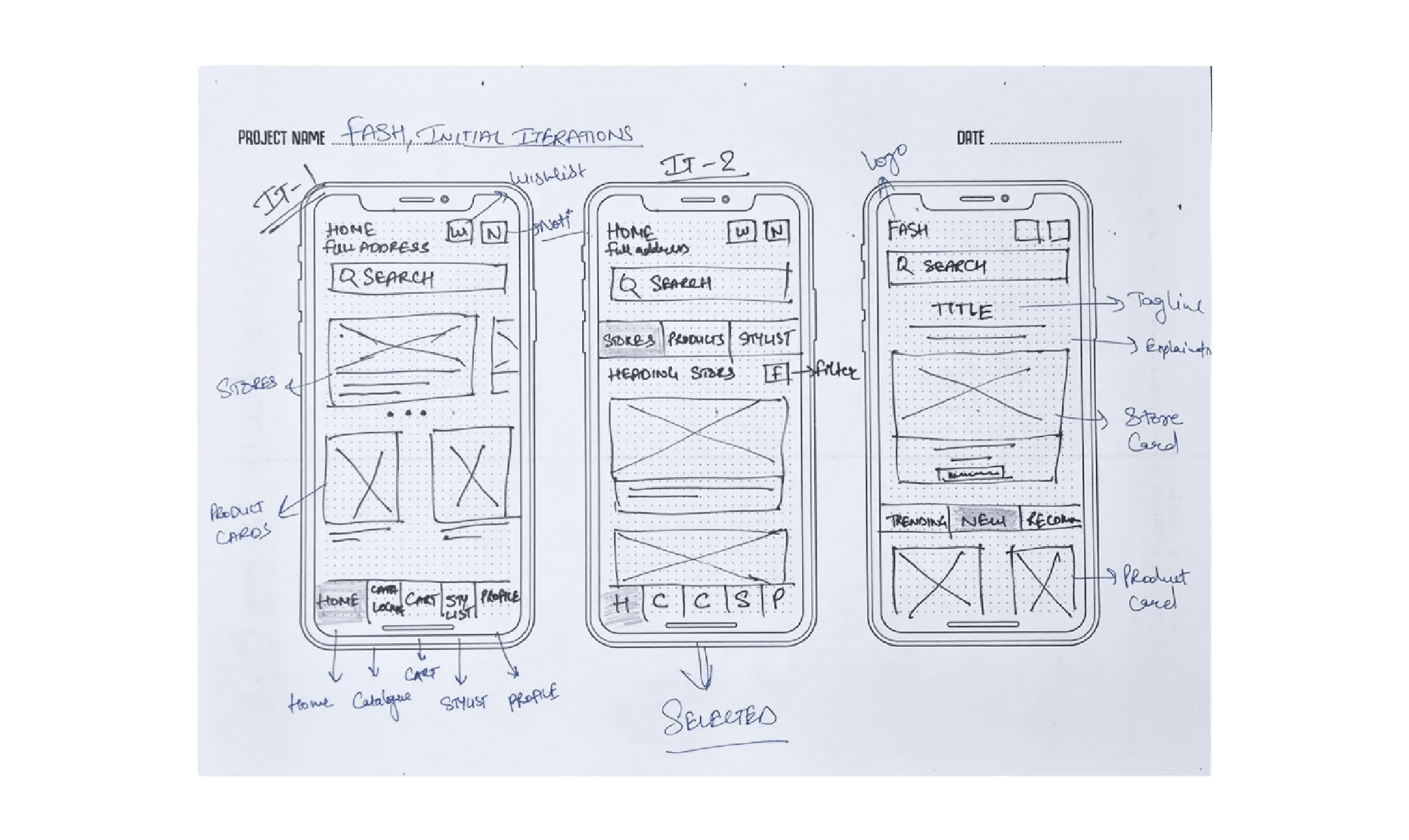
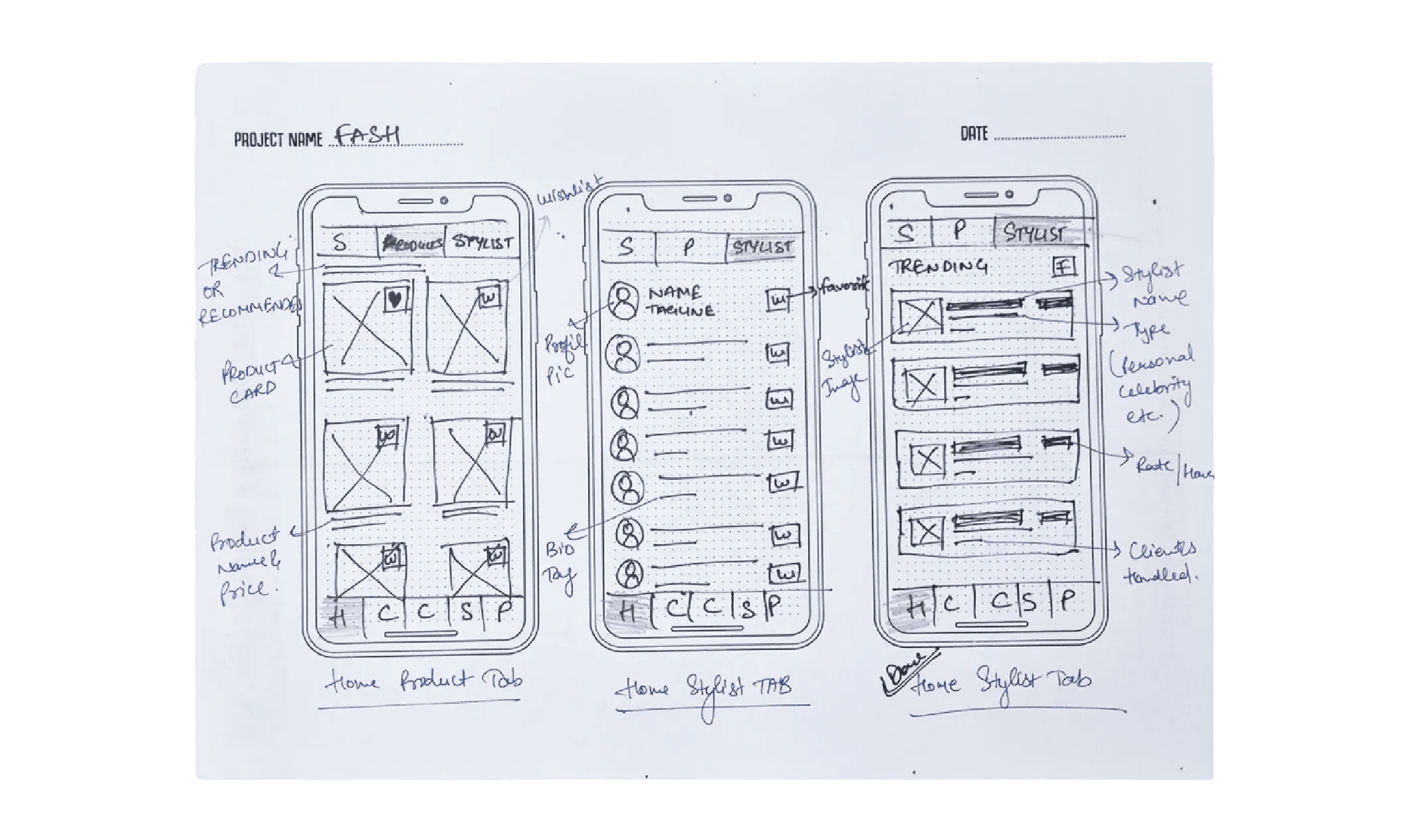
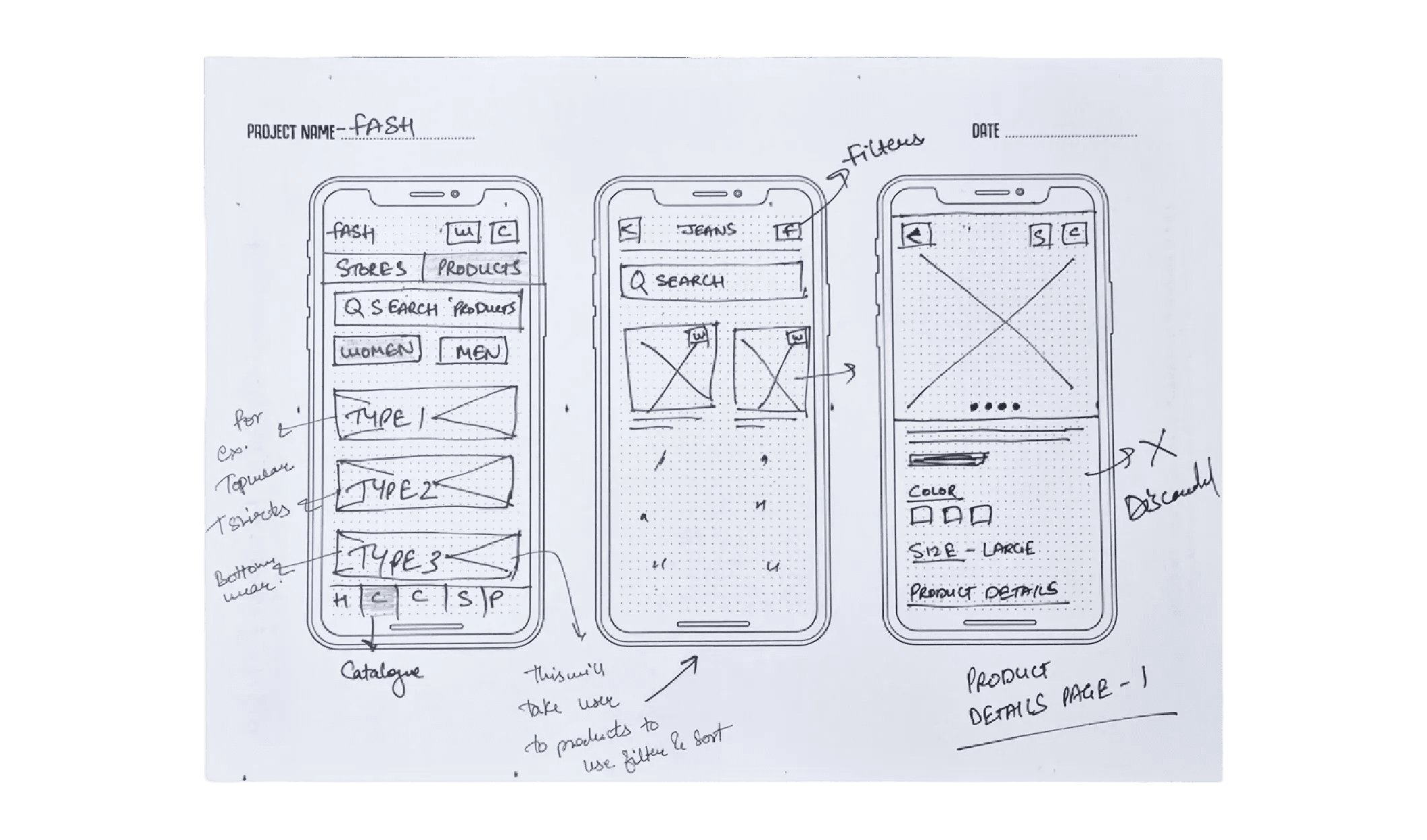
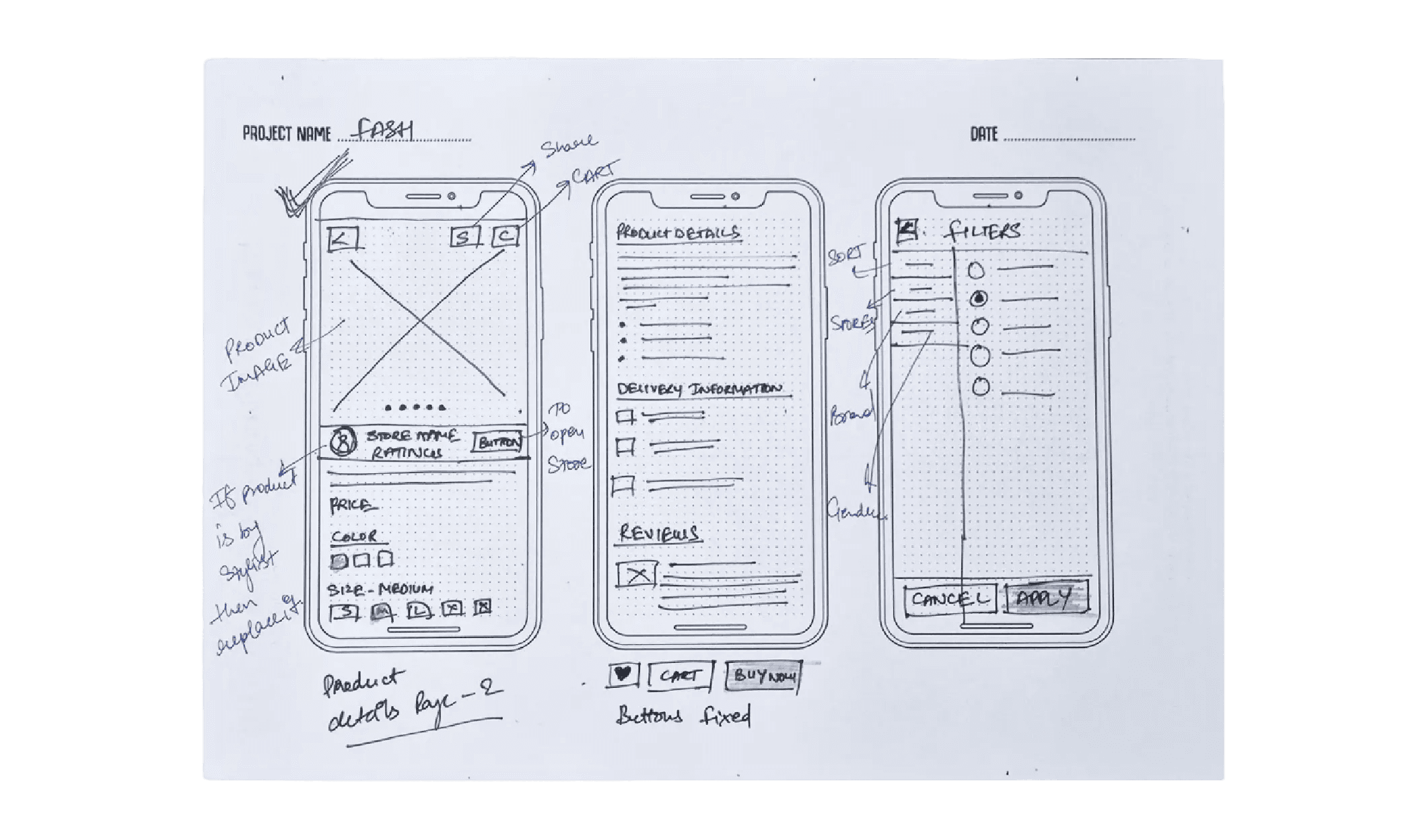
Wireframes were used to explore layout hierarchy, content prioritization, and interaction patterns that minimized cognitive load while keeping the experience visually engaging.
Key Design Decisions & Trade-offs
|
|
|
|
|
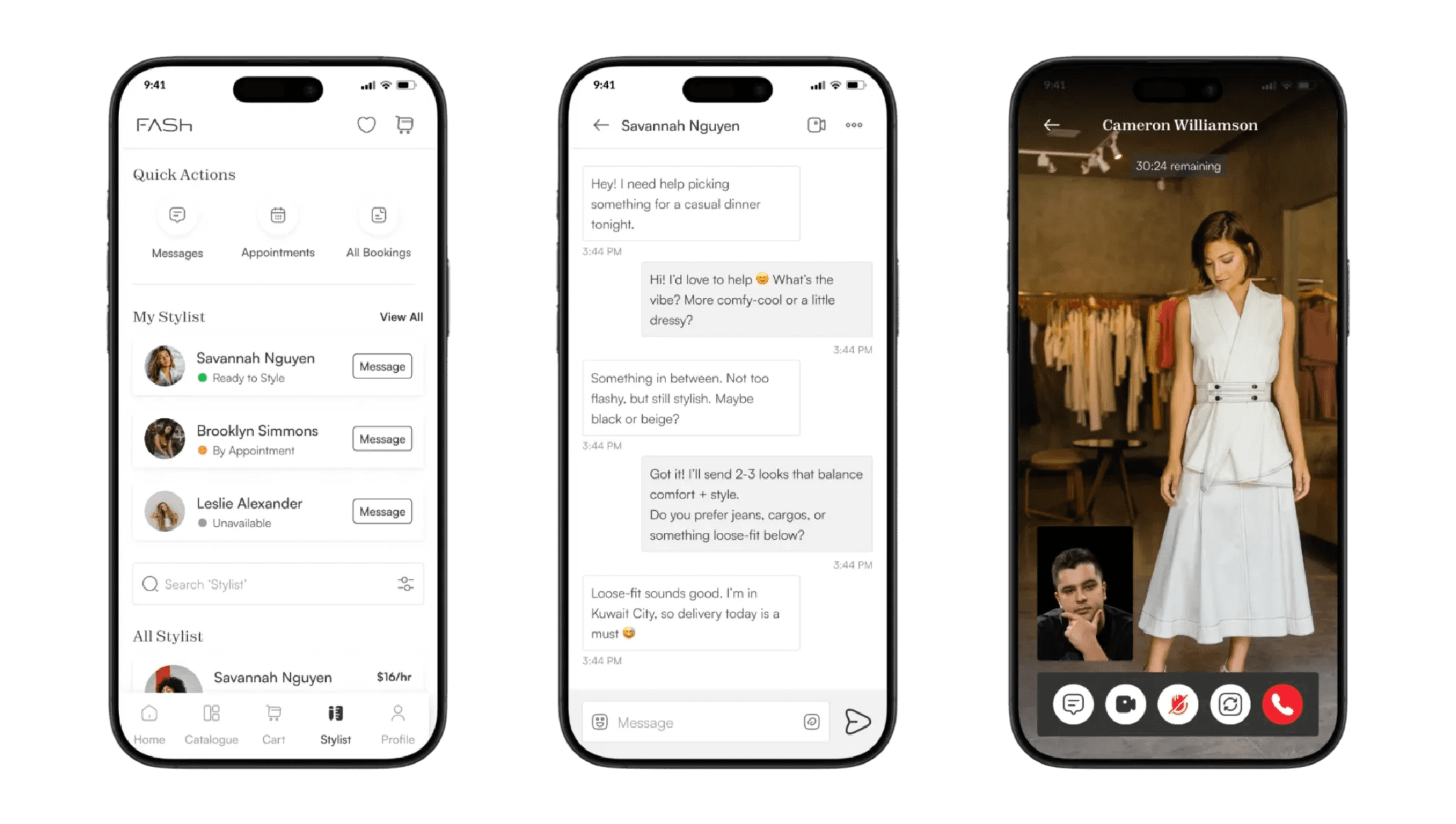
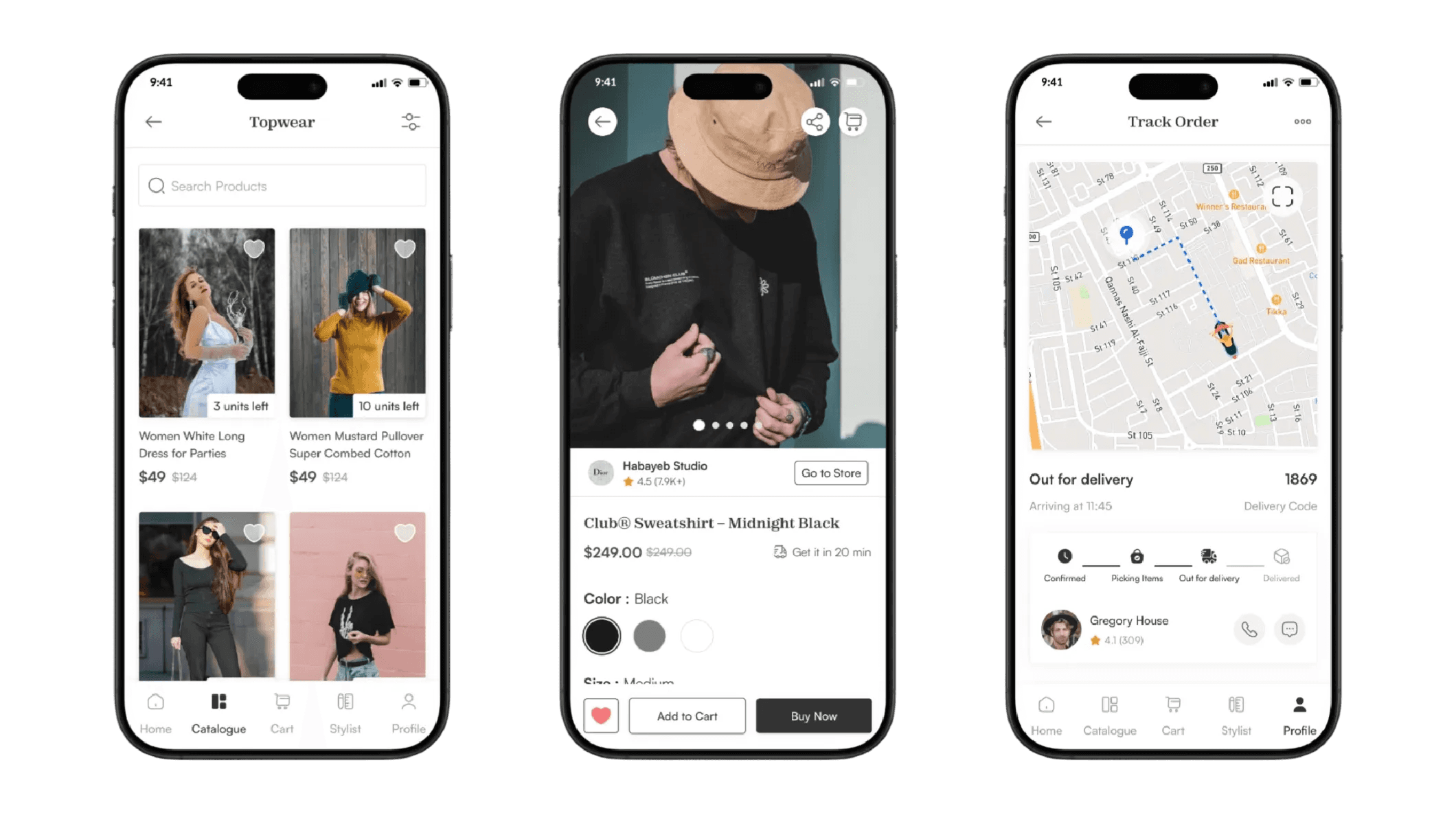
The final UI emphasizes visual confidence, guided decisions, and seamless transitions between browsing, styling, and booking.
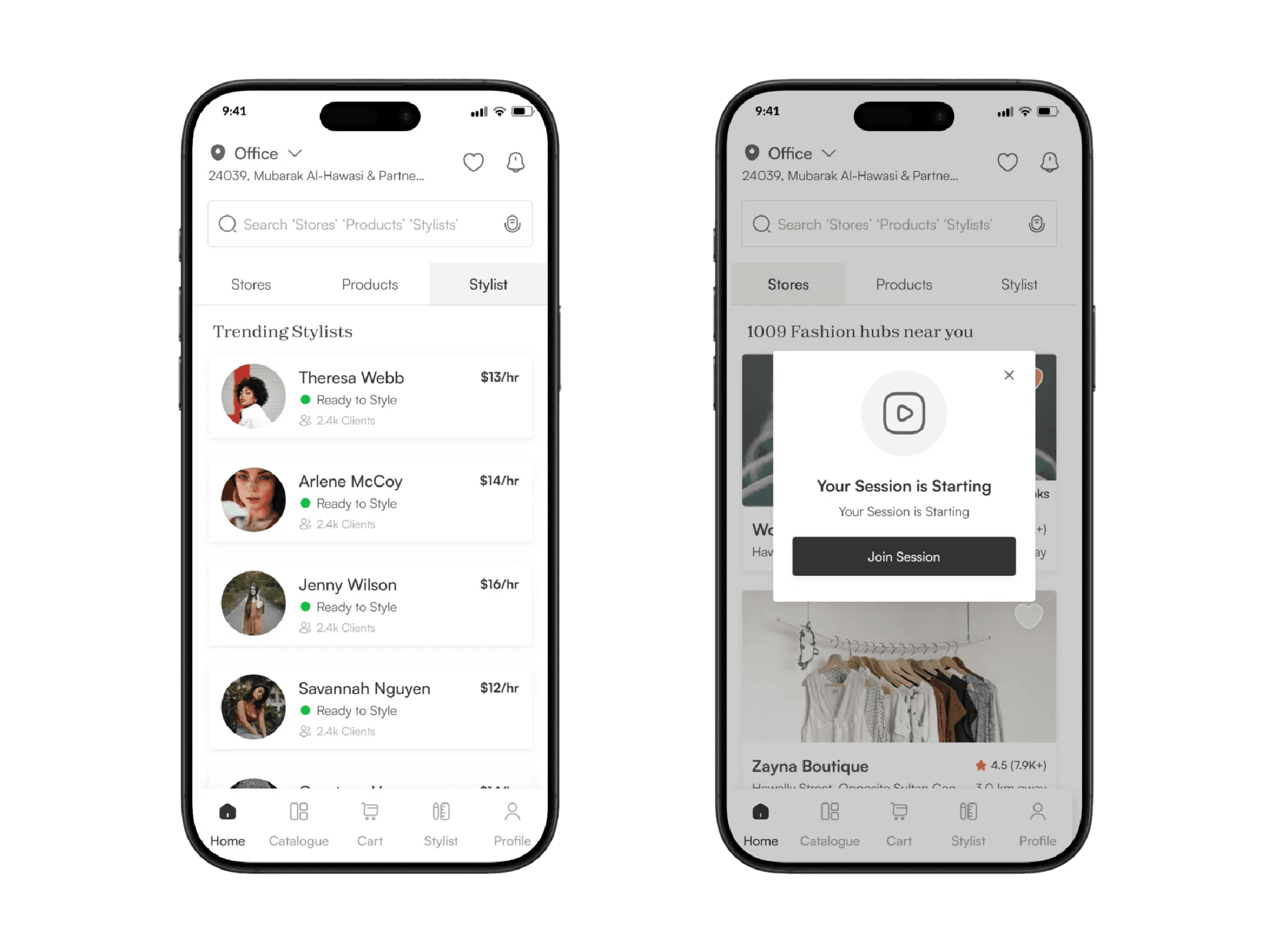
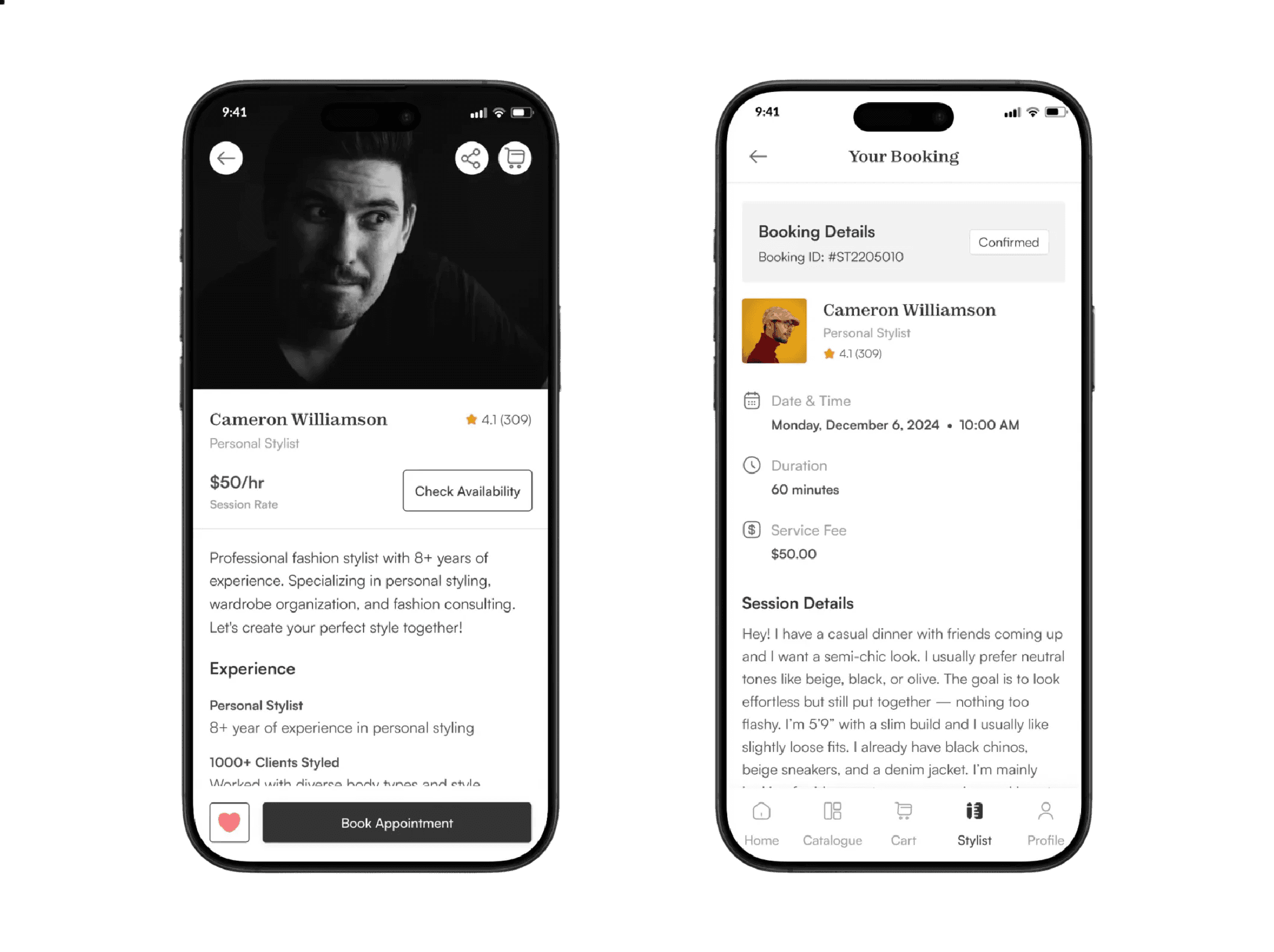
• Faster decision-making through guided discovery and stylist support
• Reduced browsing time by focusing users on relevant choices
• Improved user confidence through real-time styling interactions
• Clearer mental model of the shopping and booking flow
• In consumer fashion, confidence matters more than quantity
• Guidance and trust can be stronger value drivers than features
• Reducing choices can significantly improve user satisfaction
• Visual clarity plays a critical role in perceived product quality